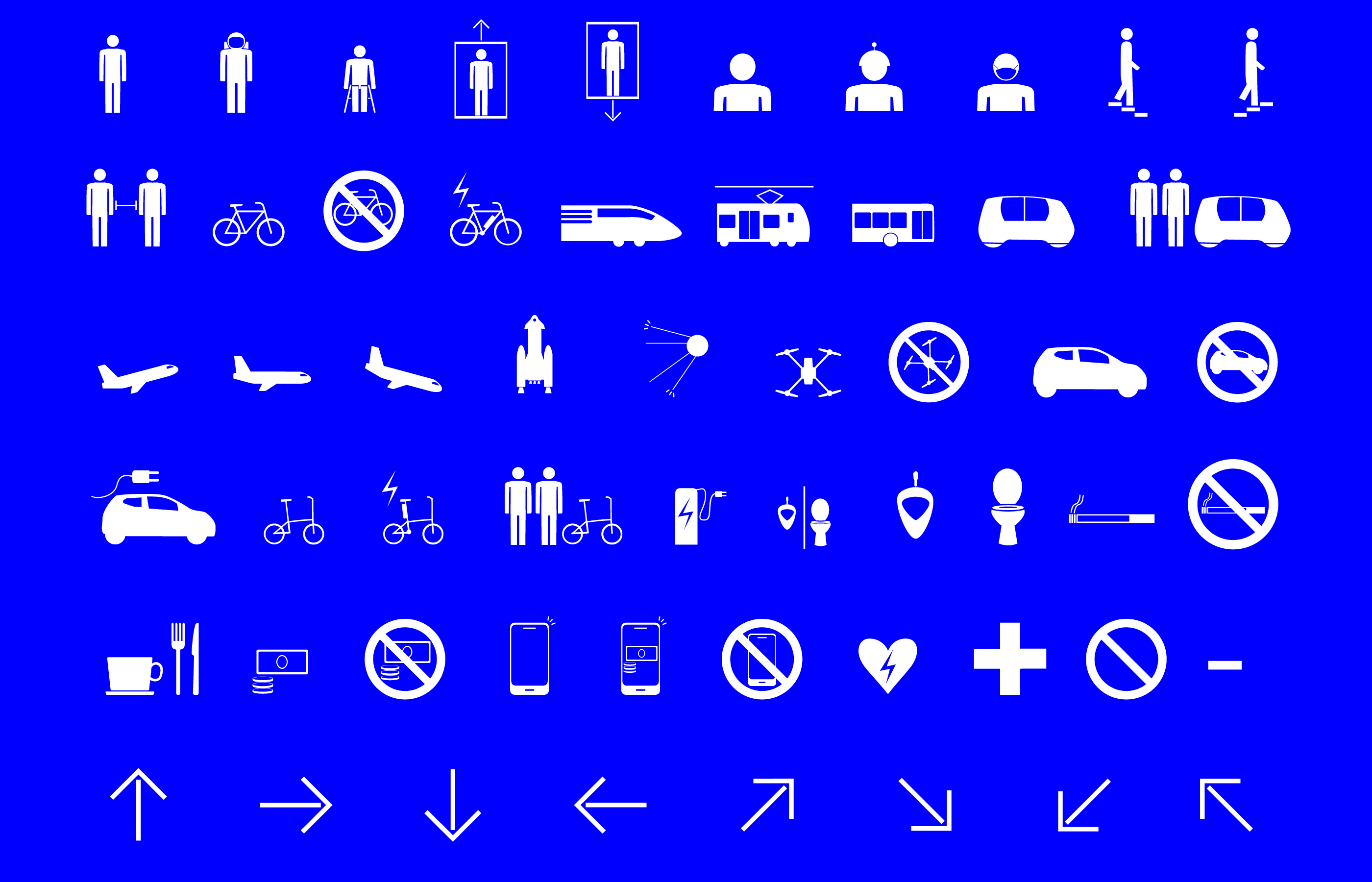
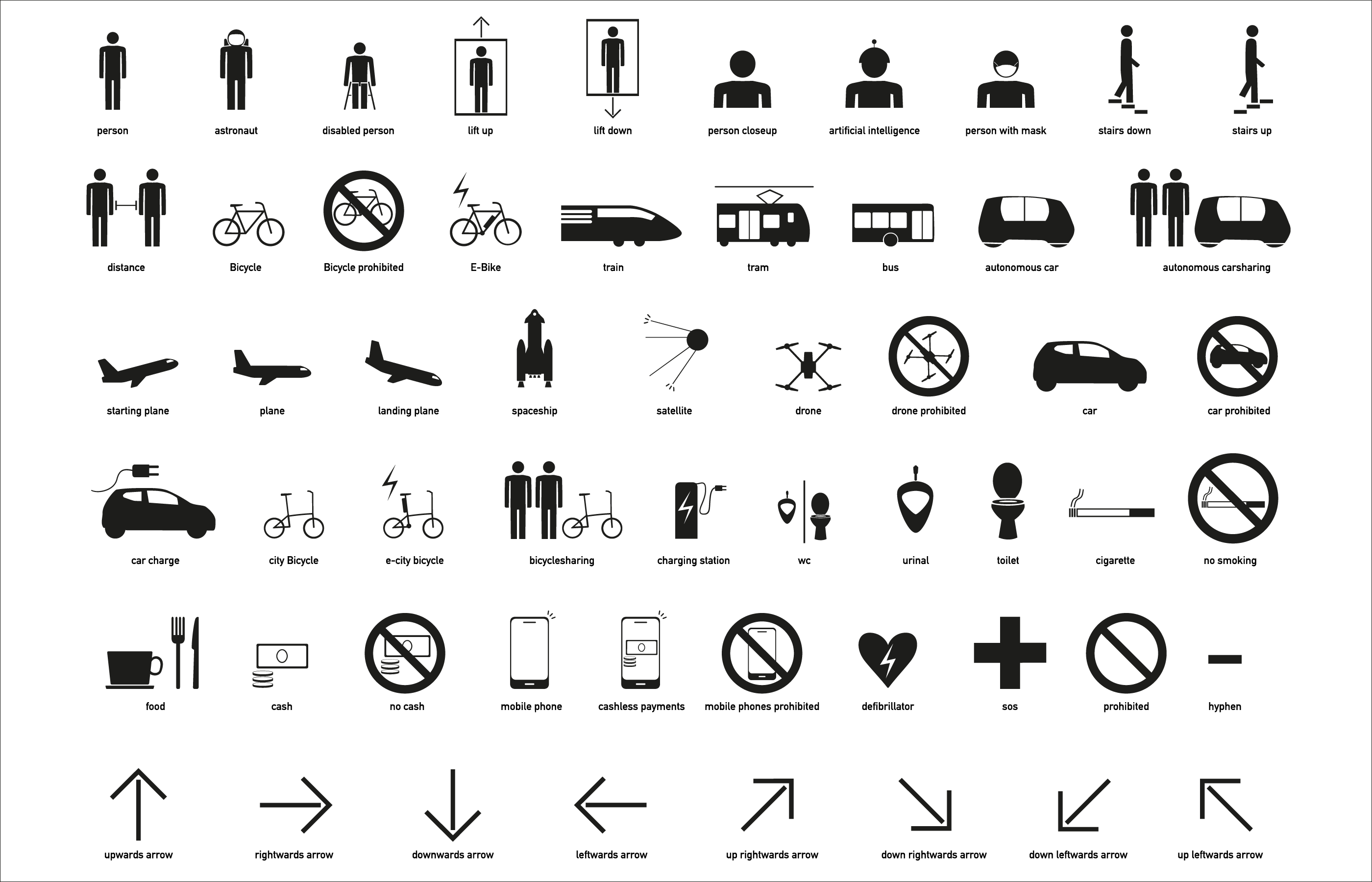
Voyager, Johannes Häffner
The Voyager, as of today is still far from reaching its destination. The world and our society are constantly changing. So is one of the most used fonts, Pictograms.
Anyone who ever was in need of a toilet in a public space should be familiar with it. A figure with skirt = woman; a figure without skirt = man. As easy as this taught principle is, the less it will exist in the near future.
What are the requirements for a pictogram font in 2050?
Voyager tries to answer this question.
A look into the future and a time capsule at the same time.
In the guideline of intelligibility, Voyager is limited to the lowest common denominator of a modern society and it is limited to one symbol:
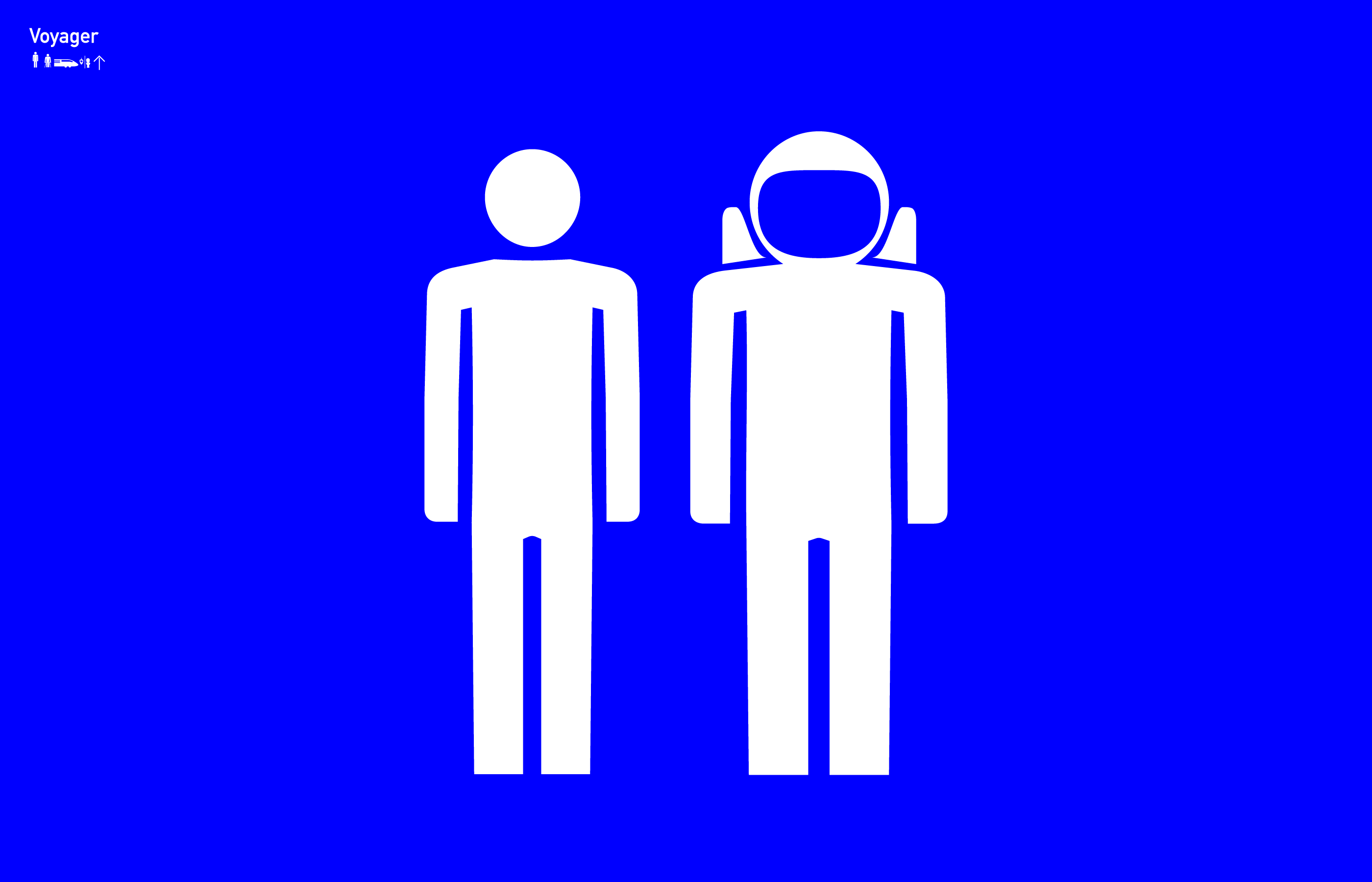
The person. Gender roles and stigmas are abolished. Toilets are assigned by use, not gender.
There is a person in the lift and not a man.
What is in the suit of the "astronaut" is a person, no more and no less.
Because in the near future, space travel will no longer be an exclusive club dominated by men. Programs like SpaceX and Blue Origin are making space travel more and moreaccessible to „common“ people and with Mars in prospect, nothing stands in the way of private space travel.
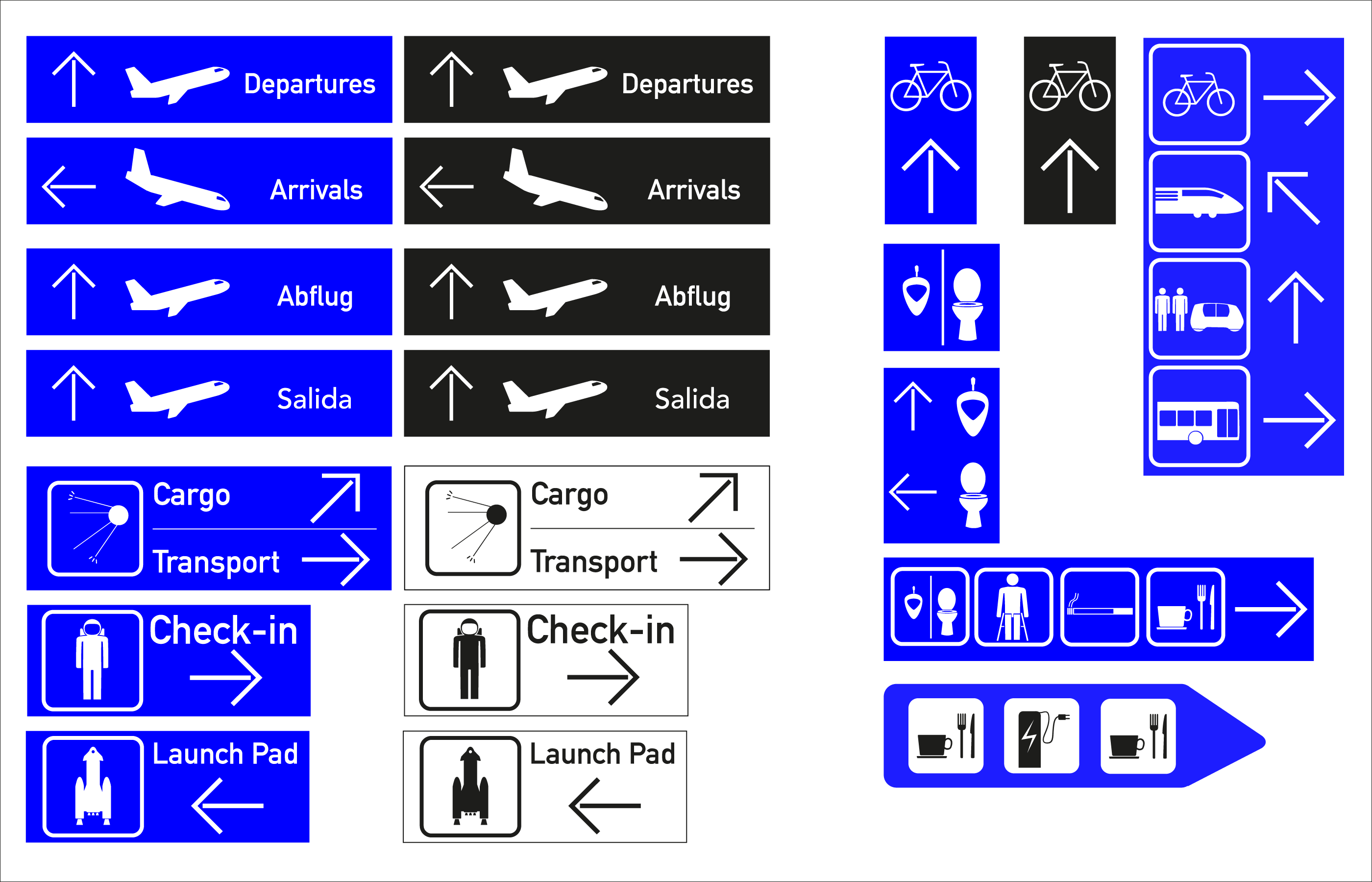
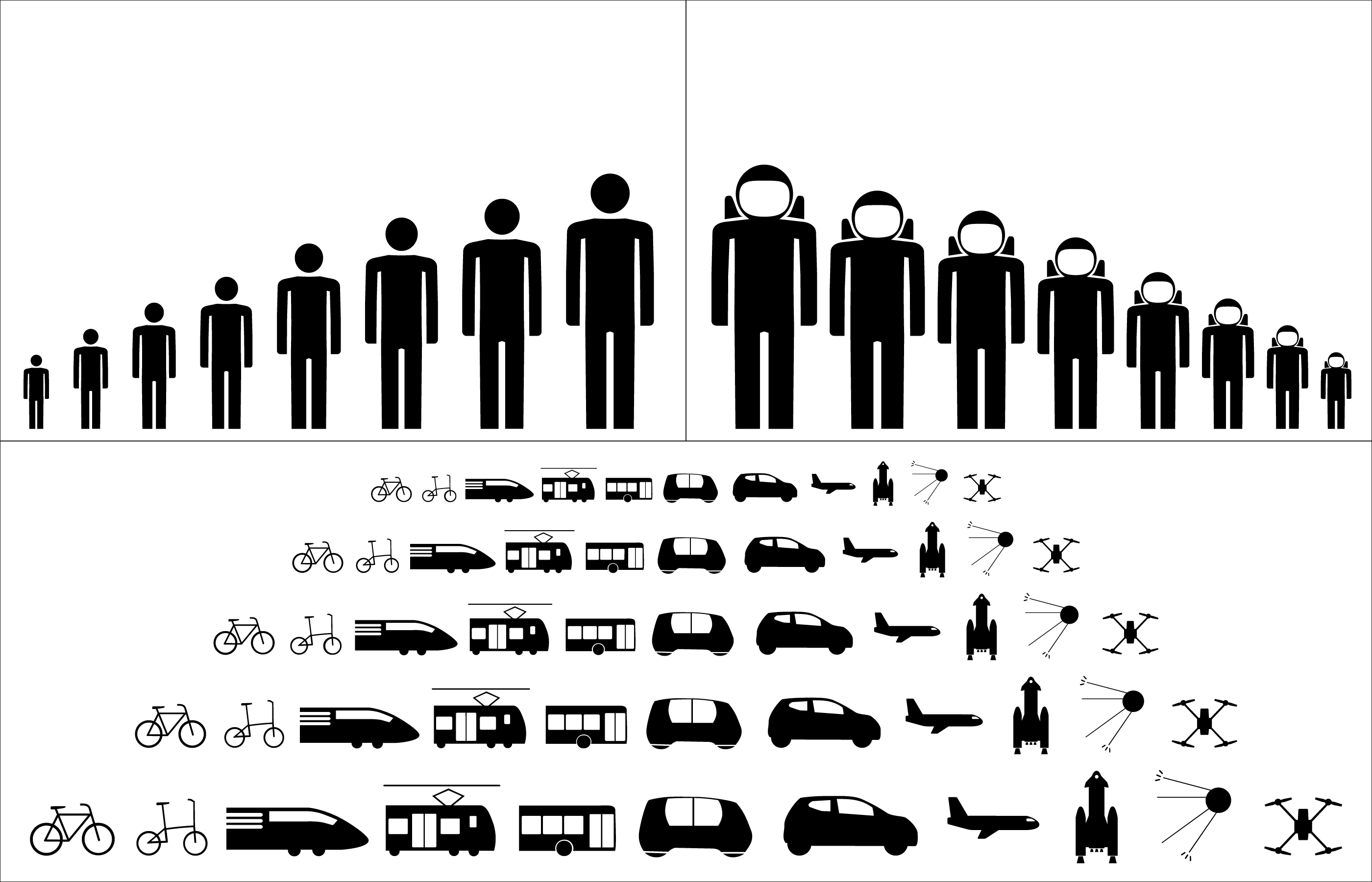
But conventional mobility is also subject to visible change. Automobiles disappear from city centres. Public transport is becoming increasingly relevant and autonomous driving is no longer a gimmick from a sc-fi film. For this, new symbols have to be developed and old ones have to be revised. The gas station will not disappear from the picture of 2050, but the offer is limited to electricity and no longer to fossil fuels. Only in the rarest of cases is payment made with cash. Digital currency is paid directly to the cell phone.
Voyager offers the opportunity to adapt more contemporary to the challenges of tomorrow.